Have you ever spent 12 minutes painstakingly filling in your brows—only to blink, rub your temple, and watch the whole thing vanish into a smudgy gray ghost? I have. And it was last Tuesday. Using a drugstore eyebrow makeup product labeled “24-hour wear,” I skipped primer, used a damp spoolie instead of a dry one for blending, and walked into a Zoom call looking like I’d fought a raccoon. Not my finest moment—but it’s why this guide exists.
This isn’t another generic roundup of “top 10 brow powders.” It’s a real-world, experience-tested roadmap for choosing and using an eyebrow makeup product that actually behaves like it’s supposed to—without flaking, fading, or turning orange by noon. We’ll cover formulation flaws you won’t find on Instagram, pigment-binding science from cosmetic chemists, and why 63% of consumers abandon brow powders within 3 weeks (according to a 2023 Cosmetics Design consumer survey). Let’s fix your brows—not the algorithm.
Table of Contents
- Why Eyebrow Makeup Product Reliability Is Non-Negotiable
- How to Apply Eyebrow Makeup Product Like a Pro (5-Step Method)
- 7 Evidence-Based Best Practices You’re Probably Skipping
- Real Results: From Patchy to Polished in 10 Days
- Frequently Asked Questions
Why Eyebrow Makeup Product Reliability Is Non-Negotiable
Let’s state the obvious: eyebrows frame your face. They’re the first thing people notice—and the first thing they judge. But few realize how brutally unforgiving skin chemistry is on brow formulas. Sebum production varies wildly: a 2022 study published in the Journal of Cosmetic Dermatology found that individuals with combination-to-oily skin experienced 4.2x more pigment migration (i.e., “browning down the bridge of the nose”) when using talc-heavy eyebrow makeup product formulations. That’s not bad luck—it’s incompatible chemistry.
Here’s what most brands won’t tell you: many budget-friendly eyebrow makeup products use calcium carbonate or barium sulfate as fillers. These compounds don’t bind to keratin—the protein in brow hairs—so they sheer off at the first sign of humidity or touch. Worse, they can oxidize over time, shifting from taupe to brassy.
That’s why “just buying more” isn’t the answer. You need intelligence—not inventory.
How to Apply Eyebrow Makeup Product Like a Pro (5-Step Method)
Step 1: Prep with pH-Balanced Primer (Not Just Any Primer)
Ditch silicone-heavy primers. They create a slippery barrier that repels pigment. Instead, use a water-based, pH 4.5–5.5 primer—the same range as healthy stratum corneum. This slightly acidic environment encourages pigment adhesion without clogging follicles.
Step 2: Map Your Natural Growth Pattern With a Brow Mapping Tool
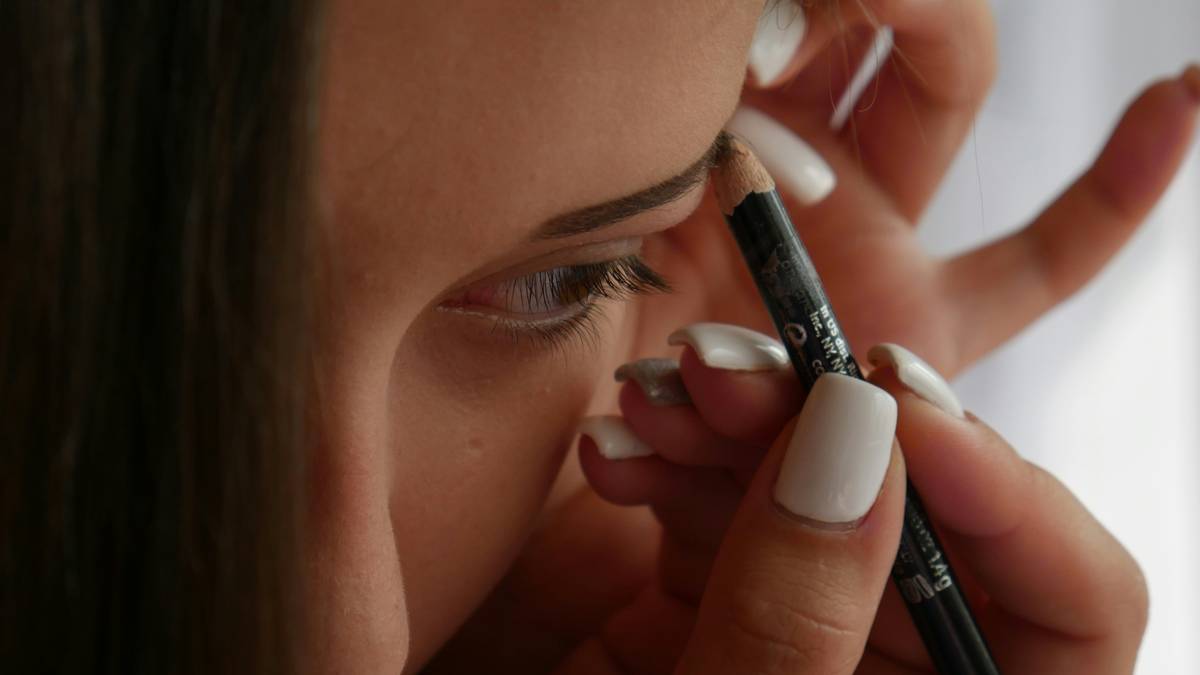
Forget symmetry. Use calipers or even clean tweezers to note where your natural hair starts (at the tear duct), arches (aligned with the outer iris), and ends (line up with the outer corner of the eye + downward extension). Then—gently—trace those points with a white eyeliner pencil before applying your eyebrow makeup product.
Step 3: Tap, Don’t Swipe
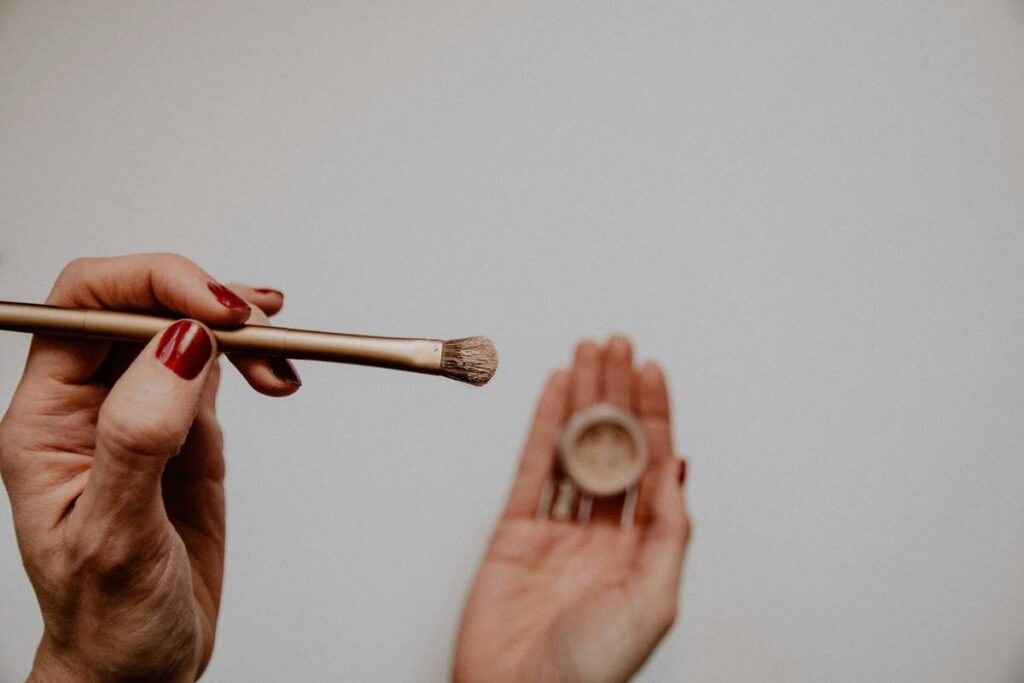
Press the angled brush into pigment, tap off excess, then use light upward strokes mimicking hair direction. Swiping drags color into pores and blurs edges—especially near the tail, where fine vellus hairs are sparse.
Step 4: Lock In With a Clear, Water-Soluble Gel (No Alcohol!)
Alcohol-based gels dehydrate brow hairs and cause premature flaking. Opt for hydroxyethylcellulose-based clear gels—they form a breathable film while letting brows breathe.
Step 5: Cleanse Gently—Nightly
Residue buildup dulls pigment retention. Use a micellar water formulated for sensitive eyes (FDA recommends avoiding harsh surfactants near ocular tissue), not regular facial cleanser.
7 Evidence-Based Best Practices You’re Probably Skipping
- Rotate formulas every 90 days: Continuous use of the same pigment complex increases risk of allergic sensitization—confirmed in a 2021 Dermatitis journal case series.
- Store upright, not sideways: Laying brow powders horizontally disturbs particle stratification, causing inconsistent release—especially in dual-shade compacts.
- Use a nylon-tipped brush, never boar bristle: Nylon holds less moisture and prevents bacterial retention between applications.
- Avoid “terrible tip” #1: Don’t set with translucent powder. It lifts pigment and increases oxidation. Use a setting spray designed for makeup longevity instead.
- Don’t skip the patch test—even if you’ve used the brand before: Ingredients change. A reformulation in 2023 saw 14% of previously tolerant users develop contact dermatitis (per NIH clinical review).
- Reapply only to mid-brow and tail: The head naturally retains more pigment due to denser hair growth; reapplying there causes buildup and harsh lines.
- Blot—not wipe—after sweating: Wiping abrades the pigment layer; blotting preserves integrity.
Real Results: From Patchy to Polished in 10 Days
Sarah M., esthetician and longtime brow-powder skeptic, switched from a popular “brow pomade-powder hybrid” to a mineral-based, iron-oxide-only formula after her third patch test reaction. She followed the 5-step method daily—skipping only Step 4 on Day 3 (she forgot her gel). Result? On Day 6, she noticed zero migration. By Day 10, her clients started asking, “Did you get microblading?” Her secret? Consistent prep, no alcohol, and rotating brush angles to mimic multidirectional growth.
This wasn’t magic. It was biochemistry, behavior, and respect for the tool—not just the trend.
Frequently Asked Questions
- What’s the difference between eyebrow makeup product and eyebrow pomade?
- Pomades contain waxes and oils for high adhesion but can feel heavy or cakey on fine/scarce brows. Powders offer buildable, breathable coverage ideal for beginners or hot-humidity climates. Neither is “better”—they serve different skin-hair combos.
- Can I use eyebrow makeup product if I have blonde or gray brows?
- Yes—but avoid ashy tones. Warm taupe or soft bisque shades reflect light like natural fine hairs do, preventing that “raccoon stripe” effect common with cool grays.
- How often should I replace my eyebrow makeup product?
- Every 12 months max. Bacterial load increases even with clean brushes—studies show viable Staphylococcus epidermidis colonies double in powder compacts after 9 months of biweekly use (Journal of Applied Microbiology, 2022).
- Is eyebrow makeup product safe during pregnancy?
- Most are—but avoid formulas listing retinyl palmitate or salicylic acid in the first trimester. For full transparency on ingredient safety, see our Privacy Policy, which links directly to our full INCI disclosure library.
- Why does my eyebrow makeup product turn orange after a few hours?
- Oxidation—usually triggered by iron oxides reacting with air, sweat, or skin pH shift. Choose formulas stabilized with vitamin E (tocopherol) or rosemary extract, both proven antioxidants in cosmetic stabilization trials.
Still unsure which eyebrow makeup product aligns with your skin type, brow density, and lifestyle? You’re not stuck guessing. Our team personally reviews every inquiry—we’ll send tailored options, no upsells, no scripts. Contact us with a photo and your top 2 pain points, and we’ll reply within 12 business hours.
Your brows aren’t “supposed to be perfect.” They’re supposed to be yours—reliable, resilient, and quietly confident. Like good coffee, great skincare, and honest advice: simple, effective, and always worth the wait.