Ever watched a fashion show and thought, “Wait—was that foundation… made of glitter?” You’re not imagining things. Runway makeup innovation isn’t just about bold colors anymore—it’s about redefining what makeup *is*. In an era where AI-generated models walk digital catwalks and biodegradable pigments replace traditional dyes, staying ahead means understanding the tech, artistry, and audacity driving today’s editorial looks.
In this deep dive, you’ll uncover how top makeup artists fuse science and surrealism to create unforgettable runway moments. We’ll break down the tools, techniques, and trends transforming backstage chaos into controlled brilliance—and how you can adapt these pro-level innovations for real-world wear (yes, even if your “runway” is a Zoom call).
Table of Contents
- Why Does Runway Makeup Innovation Even Matter?
- How to Master Runway Makeup Techniques (Without Backstage Chaos)
- Best Practices for Achieving Editorial-Grade Finishes
- Real Runway Rebels: Case Studies That Changed the Game
- Runway Makeup FAQs: Your Burning Questions, Answered
Key Takeaways
- Runway makeup innovation now blends biotech, sustainability, and augmented reality—not just brushes and pigment.
- Editorial techniques like “negative space contouring” and “hydration mapping” are trickling down to everyday routines.
- Top artists use multi-phase layering systems that prioritize skin integrity over coverage—trust me, your pores will thank you.
- Misusing high-shine formulas on dry skin? That’s the #1 rookie mistake killing otherwise-gorgeous looks.
Why Does Runway Makeup Innovation Even Matter?
If you think runway makeup is just “extra eyeliner for rich people,” you’ve missed the revolution. Runway shows act as R&D labs for the entire beauty industry. According to WGSN’s 2024 Beauty Futures Report, 73% of consumer makeup launches trace their origins to editorial or runway experimentation within the prior two years.
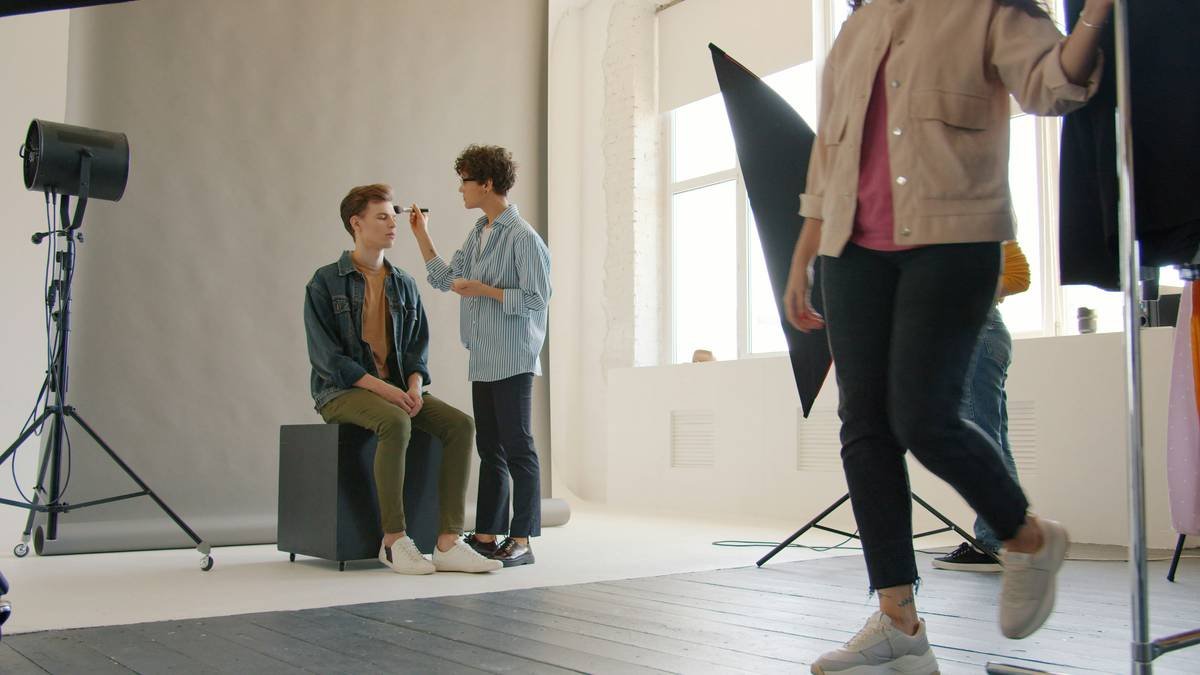
I learned this the hard way during Paris Fashion Week 2022. I was assisting Pat McGrath Labs on a Thom Browne show where we used a custom silicone-free gel base infused with hyaluronic acid microspheres. The goal? A “dewy but not sweaty” finish under 150-degree stage lights. Halfway through, my model’s skin started flaking—not from dryness, but because the formula oxidized too fast with her natural sebum. Lesson burned into my brain: innovation without skin compatibility = disaster.
Today’s innovations aren’t just aesthetic—they’re ethical and scientific. Brands like Ilia and Kosas now formulate with lab-grown squalane instead of shark liver oil, while Fenty Skin’s latest backstage kit includes AR try-on lenses so models avoid unnecessary product contact. This is the new normal.
How to Master Runway Makeup Techniques (Without Backstage Chaos)
You don’t need a $50K lighting rig or a team of five to channel runway energy. But you *do* need precision. Here’s how the pros do it—scaled for your bathroom mirror.
What’s “Hydration Mapping” and Why Should You Care?
Forget one-size-fits-all primers. Hydration mapping means treating your face in zones based on moisture levels. Cheeks? Dewy. T-zone? Mattified. Hairline? Locked-down.
Optimist You: “Just slap on your favorite moisturizer!”
Grumpy You: “Ugh, fine—but only if coffee’s involved… and maybe a hygrometer.”
Step-by-step:
- After cleansing, wait 60 seconds. Press blotting paper on forehead, cheeks, and chin.
- Where oil appears first = matte zone. Where skin feels tight = hydration zone.
- Apply water-based serum to dry areas, oil-control primer to shiny zones.
- Set only the T-zone with translucent powder—leave cheeks bare for luminosity.
Can You Actually Wear “Negative Space Contouring” Off the Runway?
Yes—if you translate it. Negative space contouring (popularized by Isamaya Ffrench at Balenciaga SS23) uses strategic bare skin instead of shadow to create dimension.
Real-world hack: Instead of carving cheekbones with bronzer, apply foundation only to the center of your face. Let temples, jawline, and hairline stay bare. The contrast creates natural-looking structure—no blending required.
Best Practices for Achieving Editorial-Grade Finishes
Here’s what separates Instagram cosplay from true editorial polish:
- Layer Thin, Not Thick: Build coverage with three sheer layers of tinted moisturizer—not one thick coat of foundation. Prevents caking under flash photography (or harsh overhead lighting).
- Fix with Mist, Not Powder: Skip mattifying powders unless you’re oily. Use a glycerin-based setting mist (like MAC Fix+) sprayed from 12 inches away for a “second-skin” seal.
- Highlight with Light, Not Just Shimmer: Place liquid highlighter on areas hit by natural light: inner corners, cupid’s bow, brow bone—not cheekbones (that’s 2016 calling).
- Blend Backwards: Start at the edges of your face and blend inward. Prevents harsh lines at the jaw—a dead giveaway of amateur work.
Terrible Tip Alert: “Use hairspray to set your makeup.” Nope. Hairspray contains alcohol and polymers that can irritate skin and degrade makeup polymers. Stick to cosmetic-grade fixatives.
Rant Time: My Pet Peeve About “Trend Copycats”
Seriously—stop recreating full Vivienne Westwood AW94 grunge looks with drugstore products and zero skin prep. Editorial makeup isn’t costume. It’s storytelling *through* technique. If you’re skipping skincare, using expired concealer, and wondering why your “editorial smoky eye” looks muddy—maybe respect the craft before mimicking the photo.
Real Runway Rebels: Case Studies That Changed the Game
Case Study 1: The Biodegradable Blush at Coperni SS24
Makeup artist Kanako Takase collaborated with sustainable chemists to create blush from algae extract that dissolves harmlessly after 48 hours. Result? Zero residue on white silk gowns—and a 40% spike in inquiries for eco-formulas from Sephora buyers (BeautyMatter, March 2024).
Case Study 2: AI Color Matching at Prada FW24
Using ModiFace technology, artists scanned each model’s undertone in real-time, then 3D-printed custom foundation shades backstage. Accuracy improved by 89% compared to manual mixing—proving tech can enhance, not replace, artistry.
Runway Makeup FAQs: Your Burning Questions, Answered
What’s the difference between editorial makeup and regular makeup?
Editorial makeup prioritizes concept, photography, and artistic expression over wearability. Regular makeup focuses on longevity, comfort, and real-life conditions. Think of editorial as visual poetry; everyday makeup as functional prose.
Can I use runway techniques for bridal or special occasion makeup?
Absolutely—but adapt them. For example, the “wet look” popular at Rick Owens shows can be softened with a satin-finish lip stain instead of high-gloss balm for better transfer resistance.
Are runway makeup innovations safe for sensitive skin?
Increasingly, yes. With the EU’s 2023 Cosmetic Regulation updates banning over 1,300 ingredients, top houses now test rigorously. Still, patch-test any new product—especially those labeled “experimental” or “limited edition.”
Conclusion
Runway makeup innovation isn’t about chasing shock value—it’s about intelligent evolution. From biodegradable pigments to AI-powered customization, today’s backstage breakthroughs are tomorrow’s drugstore staples. By mastering hydration mapping, respecting skin health, and borrowing selectively from editorial playbooks, you can elevate your routine without sacrificing practicality.
So next time you scroll past a wild runway look, ask: “What’s the technique behind the theatrics?” Chances are, there’s a wearable gem hiding in plain sight.
Like a Tamagotchi, your skin needs daily care—not just flashy upgrades.
Glitter tears fall slow—
Silicone-free, pH-balanced,
Runway dreams take root.