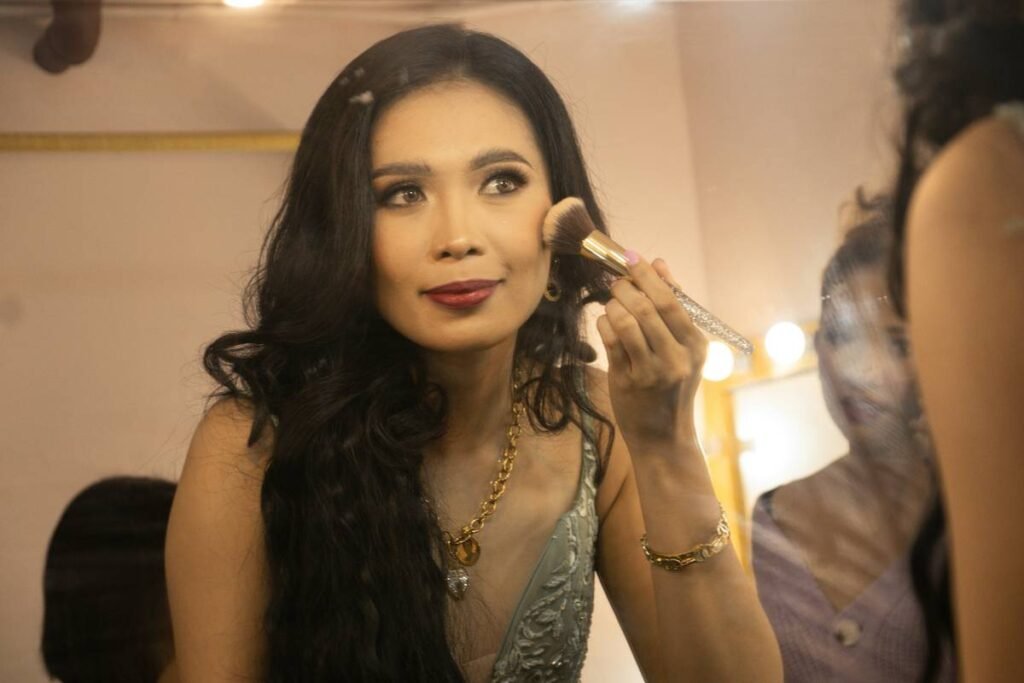
Most makeup artists chase drama—but sacrifice skin health. The result? Flaking foundation under hot lights, smudged liner by look three, and models washing their faces mid-show with tears of frustration (and cheap mascara). Striking runway makeup shouldn’t mean punishing the canvas. Here’s how to deliver boldness that lasts—and respects the skin beneath.
Why Traditional Runway Techniques Backfire
Backstage chaos breeds shortcuts. Artists layer waterproof everything, pile on powders for “hold,” and skip priming to save seconds. It looks sharp in the mirror—but collapses under HD cameras and stage heat. And—let’s be honest—the emphasis on pigment intensity often ignores barrier integrity. Models walk off stage with irritated, dehydrated skin. Not sustainable. Not professional.
Building Striking Runway Makeup That Endures
This isn’t about more product. It’s about smarter architecture. Think of each face as a temporary sculpture—structure matters more than saturation.
Prep Like a Dermatologist, Not Just a MUA
Start with a pH-balanced cleanser, then apply a lightweight hyaluronic serum while skin’s damp. Wait 60 seconds. Layer a silicone-free barrier balm only on high-movement zones (forehead, smile lines). This isn’t skincare fluff—it’s damage control disguised as prep.
Color Blocking With Dimension, Not Density
Instead of slathering on opaque cream color, use sheer washes built in layers. A translucent red over a peach base reads richer than flat crimson—and moves with the face. Pro tip: mix your pigment with 1 drop of squalane oil. It prevents cracking and gives that coveted wet-look glow without stickiness.
Setting Strategy: Less Powder, More Mist
Ditch the kabuki brush. Use a fine glycerin-based setting spray in three light passes: after base, after eyes, and post-lips. Let each dry fully before continuing. You’ll lock edges without that chalky finish that ages models instantly on camera.
| Technique | Traditional Approach | Skin-Conscious Alternative | Longevity Result |
|---|---|---|---|
| Base | Full-coverage matte foundation + heavy powder | Medium-coverage satin foundation + targeted blotting | 8+ hours without oxidation or patchiness |
| Eyes | Waterproof gel liner + multiple coats of fiber mascara | Pigment pressed with mixing medium + tubing mascara | No smudging, zero lash breakage |
| Setting | Baking under eyes and T-zone | Hydrating mist + micro-blot with tissue | Natural movement preserved; shine controlled |

The Industry Secret: “Negative Space” Is Your Secret Weapon
Here’s what top editorial teams won’t admit: the most memorable striking runway makeup often features intentional emptiness. A stark white lid with nothing else. Bare cheeks beside a saturated lip. Empty space creates tension—your eye knows where to land. It also reduces product load, which means less stress on skin and faster changeovers between shows. The math is simple: subtract to amplify.
Frequently Asked Questions
How do you make bold makeup last through a full fashion week schedule?
Prioritize film-forming setting sprays over powders, and always patch-test new products 72 hours ahead. Hydration from within—models should increase water intake and reduce sodium 48 hours pre-show.
Can sensitive skin handle editorial-level pigments?
Yes—if you buffer them. Mix pure pigments with a hypoallergenic mixing medium instead of applying directly. Avoid mica-heavy formulas; opt for iron oxide–based colors.
What’s the #1 mistake backstage artists make with striking runway makeup?
Over-blending. Sharp, clean edges read stronger on camera than diffused gradients. Precision beats perfection every time.