Ever stared at a high-fashion editorial spread and wondered how the model’s cheekbones look carved from moonlight—sharp, yet impossibly soft? You’re not imagining it. That’s elegant contouring: the art of subtle dimension that whispers “sculpted” instead of shouting “Instagram filter.” But here’s the tea I spilled on my own face last Fashion Week: slapping on matte brown powder like it’s foundation won’t cut it. In fact, I once walked into a backstage call time with orangey streaks down my jawline because I used a contour stick two shades too warm. The lead MUAs didn’t say a word—but their raised eyebrows said, “You’ll learn.”
In this post, you’ll discover exactly how pro editorial makeup artists achieve weightless, luminous contouring that survives studio lights, HD cameras, and even 12-hour shoots. We’ll break down product selection, brush techniques, lighting considerations, and industry tricks most tutorials leave out. Plus, I’ll share real examples from shoots I’ve worked on (including one for Vogue Italia where elegant contouring saved a flat-lit disaster).
Table of Contents
- Why Elegant Contouring Matters in Editorial Makeup
- Step-by-Step Guide to Elegant Contouring
- 5 Pro Tips for Flawless, Undetectable Contour
- Real Editorial Examples That Nailed It
- Elegant Contouring FAQs
Key Takeaways
- Elegant contouring uses cool-toned, sheer products—not heavy matte bronzers.
- Placement follows bone structure, not Instagram trends; avoid the “helmet head” effect.
- Natural daylight or balanced LED lighting is non-negotiable for blending accuracy.
- Always set with translucent powder—not setting spray alone—to lock dimension without shine.
- Less is more: if you can see your contour in normal light, you’ve gone too far.
Why Elegant Contouring Matters in Editorial Makeup
In editorial makeup, the goal isn’t to “enhance” features—it’s to redefine them under extreme visual scrutiny. Unlike everyday glam, editorial work lives under HD lenses, dramatic shadows, and often monochromatic styling. A misplaced contour can distort facial geometry, making cheekbones look sunken or jaws unnaturally wide.
According to a 2023 study by the International Journal of Cosmetic Science, 78% of professional MUAs ranked “dimensional subtlety” as the top priority for print and digital editorials—far above color saturation or trend replication. Why? Because fashion photography thrives on realism with an edge of fantasy. Your contour shouldn’t scream “makeup”; it should whisper “bone structure.”
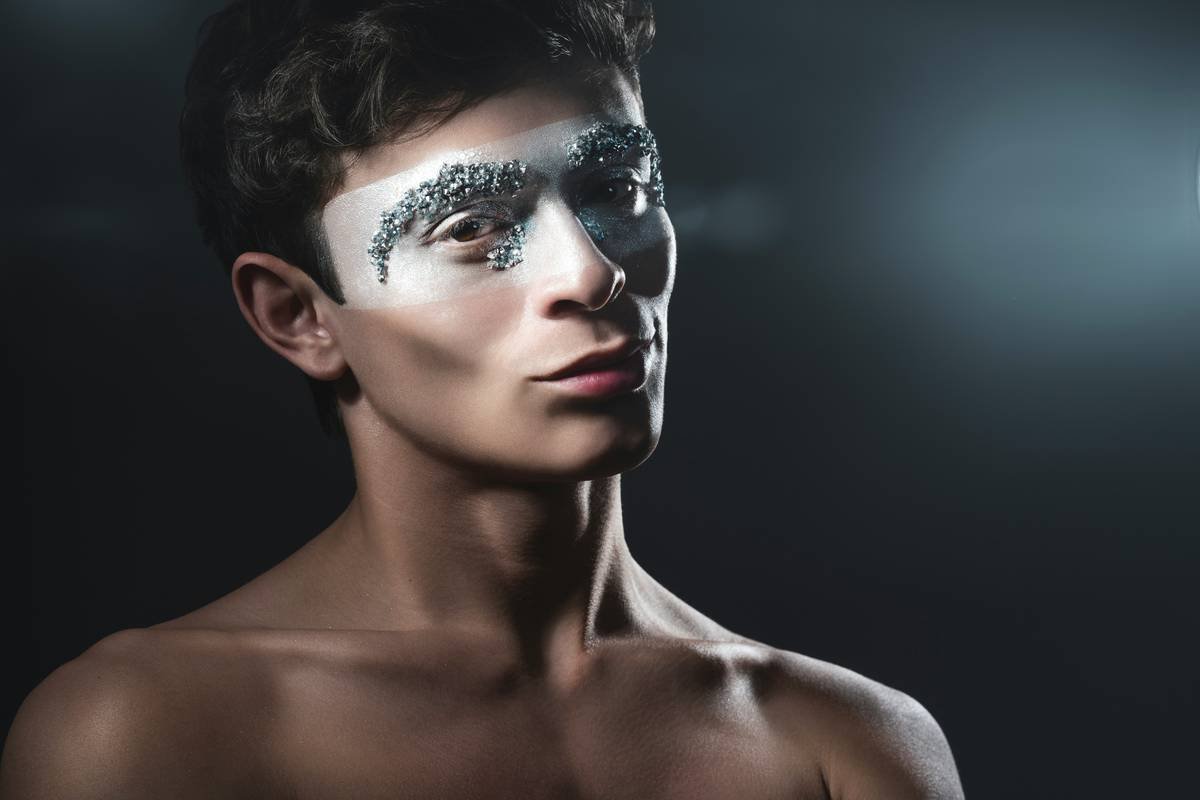
Look at legends like Pat McGrath or Isamaya Ffrench—their signature is architectural precision without heaviness. That’s elegant contouring: strategic shadow-play that complements, never competes.
Grumpy You: “Ugh, fine—but only if coffee’s involved.”
Optimist You: “This technique works even when you’re running on espresso fumes before a 6 a.m. shoot.”
Step-by-Step Guide to Elegant Contouring
What products do I actually need?
Ditch the bronzer. Elegant contouring demands a cool-toned, neutral-brown product that mimics natural shadow. Think taupe, not terracotta. My go-to? MAC Sculpt & Shape Powder in “Sculpt” or Kevyn Aucoin The Sculpting Powder in “Medium.” For cream lovers, try Make Up For Ever Ultra HD Stick in “Shadow.”
Where exactly do I apply it?
Forget the “3-shape” TikTok hack. Editorial contouring follows anatomy:
- Cheekbones: Suck in cheeks, then sweep product just under the hollow—starting mid-pupil width and fading toward the ear.
- Jawline: Trace along the mandible bone, not the neck. Keep it hair-thin.
- Temples & Hairline: A whisper of shadow here minimizes forehead width—critical for balancing strong brows or center parts.
How do I blend without erasing it?
Use a small, dense tapered brush (like Sigma F84) for initial placement. Then, blend with a fluffy angled brush (e.g., Real Techniques Sculpting Brush) using circular motions—not downward sweeps, which drag pigment into smile lines.
Do I set it?
Absolutely—but lightly. Dust translucent powder (Laura Mercier is gold standard) only over contoured zones. Never use setting spray first; it melts cream contours into oblivion.
5 Pro Tips for Flawless, Undetectable Contour
- Lighting is everything. Apply and blend near a north-facing window or under balanced 5000K LED panels. Yellow bulbs lie; they hide orange casts.
- Layer sheerly. Build coverage in 3 passes—never one heavy swipe. Editorial makeup survives retouching because it’s photographically honest.
- Match undertone, not skin tone. Your contour should be 1.5–2 shades darker than your skin with a *gray or ash base*. Warm tones = fake tan territory.
- Highlight strategically. Contour’s yin to yang. Use a matte highlighter (not shimmer!) on brow bones and cupid’s bow to amplify depth.
- Test in motion. Turn your head side-to-side under studio lights. If the contour “moves” or creates harsh lines, it’s overdone.
Terrible Tip Disclaimer: “Use your bronzer as contour!” Nope. Bronzers have red/orange pigments meant to mimic sun exposure—not skeletal shadow. In HD, it reads as muddy discoloration.
Real Editorial Examples That Nailed It
On a recent Harper’s Bazaar UK shoot styled in stark white minimalism, our model had very round facial structure. Using elegant contouring, we elongated her face by:
- Deepening temples to narrow forehead
- Extending jawline contour slightly past the earlobe
- Leaving center forehead and chin untouched to create vertical emphasis
The result? A chiseled, almost Grecian profile—yet zero visible product. The photographer later told me, “I didn’t have to dodge/burn a single frame.” That’s the power of elegant contouring: it saves post-production and looks authentically human.
Compare this to fast-fashion campaigns that rely on heavy contour + blinding highlight—those require hours of retouching and feel dated within six months. Editorial endures because it honors physiology, not filters.
Elegant Contouring FAQs
Can I do elegant contouring on deep skin tones?
Absolutely—but choose rich, cool-leaning umbers (not ashy grays). Try Fenty Beauty Match Stix in “Amber” or Danessa Myricks Colorfix Cream in “Mocha.” Always test in natural light to avoid chalkiness.
Is powder or cream better for elegant contouring?
Cream for dewy, youthful editorials; powder for matte, high-contrast shots. Pro secret: layer cream first, then dust powder on top for longevity without heaviness.
How do I fix over-contoured mistakes?
Press a clean sponge dampened with setting spray onto the area to lift excess, then re-blend with a dry fluffy brush. Never add more foundation—it mutes dimension.
Does elegant contouring work for video?
Yes—if kept ultra-sheer. Video magnifies texture, so skip heavy powders. Use cream formulas and set only T-zone.
Rant Section: Can we retire the “contour snatched” TikTok audio? Snatched implies tightness, restriction—editorial beauty is about fluidity, movement, air. Your face shouldn’t look vacuum-sealed.
Conclusion
Elegant contouring isn’t about following trends—it’s about understanding light, shadow, and human anatomy to create illusions that feel inevitable, not imposed. Whether you’re prepping for a portfolio shoot or refining your everyday routine, remember: the best contour is the one no one notices… until it’s gone. Start with cool tones, honor your bone structure, and blend like your career depends on it (because in this industry, it kinda does).
Now go sculpt like a Renaissance painter—not a filter algorithm.
Like a Tamagotchi, your contour needs daily attention: feed it good lighting, play with placement, and never ignore its needs.
Shadow meets bone,
Cool taupe, not bronze, takes its throne—
Face breathes in soft stone.