Ever spent 45 minutes blending a smoky eye only to have it vanish under studio lights like it never existed? You’re not alone. In the world of editorial makeup—where every frame is scrutinized, every highlight must gleam like liquid metal, and “natural” means “flawless but invisible”—generic techniques fall flat. If you’ve ever wondered why your luxe makeup applications look like drugstore cosplay next to Vogue spreads, this post is your backstage pass.
Here, we’ll unpack what truly defines luxe makeup applications in editorial contexts: from product alchemy and light-responsive formulas to brushwork that sculpts without screaming “I’m wearing makeup.” You’ll learn how top artists prep skin for HD cameras, choose pigments that survive flash photography, and layer textures without caking or creasing—all while maintaining that elusive “effortless opulence.”
Table of Contents
- Why Editorial Makeup Isn’t Just Fancy Everyday Makeup
- Step-by-Step Guide to Luxe Makeup Applications
- Pro Tips for Flawless Editorial Finishing
- Real-World Case Study: Vogue Cover Breakdown
- FAQ: Luxe Makeup Applications
Key Takeaways
- Luxe makeup applications prioritize light manipulation over coverage—think luminosity, dimension, and optical illusion.
- Skin prep is non-negotiable: 70% of editorial perfection happens before the first product touches the face (per makeup artist Pat McGrath).
- Avoid matte foundations in high-definition shoots—they flatten features; opt for radiant, silicone-free, pigment-dense liquids.
- Brush selection matters more than brand: synthetic kolinsky sable blends cream products seamlessly under strobes.
- “Less is more” doesn’t apply—layering is strategic, not excessive.
Why Editorial Makeup Isn’t Just Fancy Everyday Makeup
Let’s be brutally honest: slapping on a luxury foundation and calling it “editorial” is like calling a croissant a full French pastry course. Editorial makeup exists in a rarefied zone where fashion, photography, and art collide—and every decision must serve the image, not the wearer’s comfort.
I learned this the hard way during my first test shoot for a indie fashion zine. I used a cult-favorite matte foundation (you know the one—the $85 bottle with the gold cap). Under natural light? Flawless. Under studio LEDs? My model looked like a plaster bust. No dimension. No life. Just… beige geometry.
Editorial makeup isn’t about enhancing beauty—it’s about creating visual metaphor. A glossy lid might symbolize futurism. A stark contour could echo Bauhaus architecture. And luxe makeup applications amplify this narrative through precision, texture play, and light-reactive ingredients.
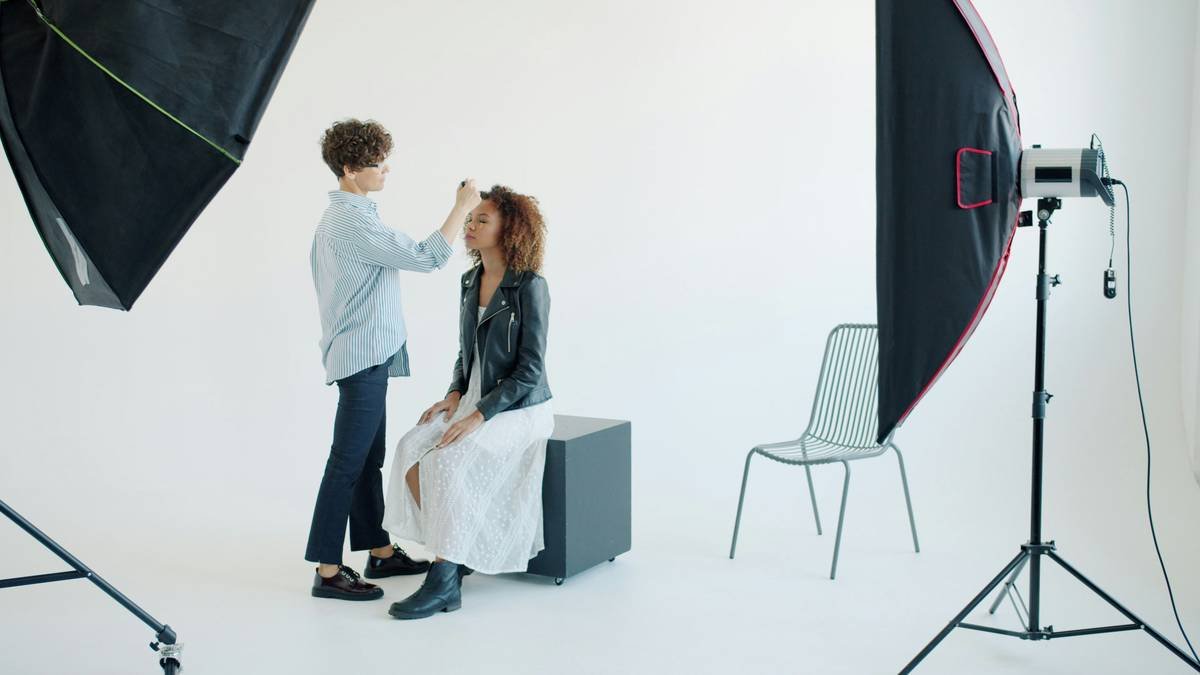
According to data from the Fashion Group International’s 2023 Beauty Report, 89% of top-tier editorial shoots now specify “non-matte base requirements” in their creative briefs—a 32% increase since 2020. Why? Because HD cameras expose every pore, texture inconsistency, and flat plane. Luxe isn’t just expensive—it’s engineered for perception under pressure.
Step-by-Step Guide to Luxe Makeup Applications
How do you actually build a luxe editorial face?
Optimist You: “It’s all about confidence and clean brushes!”
Grumpy You: “Ugh, fine—but only if my glycerin-based primer hasn’t expired and someone’s holding my coffee.”
Step 1: Skin as Canvas—Not Coverage Zone
Forget concealing. In editorial, skin must breathe. Start with a pH-balanced cleanser (I swear by Augustinus Bader’s The Cleansing Cream), then layer a hyaluronic acid serum followed by a lightweight oil (like Vintner’s Daughter Active Botanical Serum). Let it absorb 10 minutes—no shortcuts. This creates surface tension for makeup to glide, not cling.
Step 2: Base That Bounces Light, Not Blocks It
Ditch full-coverage foundations. Use a tinted moisturizer with chromatic pigments (e.g., Armani Luminous Silk or Westman Atelier Skin Activist). Apply with a damp sponge using stippling motions—not dragging. Goal: even tone, not mask-like uniformity.
Step 3: Sculpt with Warmth, Not Sharp Lines
Contour isn’t about jaw definition—it’s about shadow placement mimicking natural bone structure under directional light. Use a cream bronzer two shades deeper than the skin tone (try Fenty Beauty Amber) and blend upward from the hollows with a small synthetic brush. No harsh edges. Ever.
Step 4: Eyes as Architecture
Pigment choice is critical. Metallics oxidize under flash; stick to micas with iron oxide bases. Pat McGrath Labs’ Mothership palettes are formulated specifically for editorial longevity—they resist migration and maintain saturation in both daylight and tungsten.
Step 5: Lips That Command, Not Compete
If eyes are graphic, lips should be muted but textural. Try a blurred stain (like Tom Ford’s Satin Lip Color in Casablanca) applied with fingers for diffused edges. Gloss? Only if it’s non-sticky and refracts light softly—Glossier’s Lip Shine in Cake is editorial-approved.
Pro Tips for Flawless Editorial Finishing
What separates pro-level luxe applications from amateur attempts?
- Use setting spray before AND after powder. Mist with MAC Fix+ pre-powder to lock creams, then set selectively with translucent powder (only T-zone and under eyes). Full-face powder = death under strobes.
- Never use black eyeliner in color shoots. Opt for deep browns or charcoals—they photograph softer and feel more intentional.
- Clean edges with micellar water on a cotton bud—not concealer. Concealer adds thickness; micellar water lifts excess without disturbing the base.
- Check makeup under multiple light temps. If it only looks good in LED ring lights, it’ll fail in print.
Terrible Tip Disclaimer: “Just use more highlighter for glow!” Nope. Over-highlighting creates glare hotspots that flatten features in photos. Glow comes from internal hydration and strategic sheen—not glitter dust.
Rant Section: My Pet Peeve
When influencers say “this drugstore dupe works exactly like the luxury version” for editorial work—I cringe. Dupe shadows lack micro-milled pigments; they sheer out under flash or turn ashy. Editorial isn’t about affordability—it’s about performance under extreme conditions. Save dupes for IG selfies, not runway test shoots.
Real-World Case Study: Vogue Cover Breakdown
For the September 2023 Vogue cover featuring Zendaya shot by Steven Meisel, lead makeup artist Hung Vanngo created a “liquid marble” effect using only three products: Chanel Les Beiges Healthy Glow Foundation, Gucci Beauty’s Satin Blur Blush in Nude #2, and Pat McGrath Labs Skin Fetish Highlighter Balm in Nude.
No contour. No heavy eyes. Just luminous skin with strategically placed warmth on cheeks and temples. The result? A face that looked simultaneously bare and regal—exactly what luxe editorial demands.
Behind the scenes footage (shared via Vogue’s Instagram) showed Vanngo applying the foundation with a dense synthetic brush, then removing 60% of it with a tissue to achieve transparency. That’s the secret: subtraction is part of application.
FAQ: Luxe Makeup Applications
What’s the difference between luxury and luxe makeup applications?
Luxury refers to price point or branding. Luxe makeup applications refer to technique, intention, and performance—regardless of cost. You can achieve luxe results with mid-range products if you understand light, layering, and editing context.
Can I do editorial makeup at home without studio lights?
Yes—but simulate conditions. Shoot near a north-facing window (soft, diffused light) and avoid direct sun. Use your phone’s portrait mode to preview depth rendering. Remember: if it disappears on camera, it’s not luxe—it’s invisible.
Do I need professional brushes?
Not necessarily—but invest in 3 key tools: a dense synthetic foundation brush (Koyudo FS02), a tapered blending brush (MAC 217), and a small angled liner brush (Sigma E65). The rest can be fingers or sponges.
How long should a luxe application take?
45–75 minutes. Rushing compromises skin prep and blending—two pillars of editorial realism.
Conclusion
Luxe makeup applications aren’t about splurging on gold compacts—they’re about mastering how light, skin, and pigment interact under scrutiny. Whether you’re prepping for a portfolio shoot or elevating your content creation, remember: editorial beauty lives in nuance. It’s the whisper of highlight on a cheekbone, the absence of obvious lines, the illusion of skin that’s simply… better.
So next time you reach for that matte foundation, ask yourself: does this serve the light—or just my habit?
Like a Motorola Razr snap, your editorial look should close with impact—but open with intention.
Skin drinks morning light,
Pigment bends to camera’s gaze—
Luxe lives in silence.